

How Humidity Affects Solid Wood Furniture in Alberta’s Climate
Posted by Solid Wood Superstore on 3rd Feb 2026
Alberta’s climate creates unique challenges for solid wood furniture. Long, dry winters followed by fluctuating humidity levels during warmer months place constant stress on natural wood materials. These changes cause wood to expand, contract, and shift throughout the year, which can lead to visible and structural issues if not managed properly.
At Solid Wood Superstore, questions about cracking, warping, and seasonal movement come up frequently from homeowners trying to understand how Alberta’s environment affects their furniture. Knowing how humidity interacts with solid wood helps prevent damage and extends the life of finished pieces.
Alberta’s Climate and Indoor Humidity Levels
Alberta experiences extended cold seasons where outdoor air holds very little moisture. When this dry air is heated indoors, relative humidity levels often drop well below what solid wood requires to remain stable. During winter, indoor humidity can fall into extremely low ranges without active moisture control.
In contrast, spring and summer bring higher humidity and rapid swings in moisture levels, especially in homes with air conditioning systems that cycle frequently. These fluctuations cause solid wood to repeatedly absorb and release moisture, leading to ongoing dimensional movement.
How Humidity Changes Affect Solid Wood
Solid wood is hygroscopic, meaning it absorbs and releases moisture based on surrounding air conditions. When humidity drops, wood loses moisture and shrinks. When humidity rises, wood absorbs moisture and expands.
In Alberta homes, this constant cycle creates several common issues:
- Cracking and splitting during dry winter months
- Warping or cupping when humidity rises
- Gaps forming between joints or panels
- Stress on joinery, fasteners, and finishes
These effects are not manufacturing defects. They are natural responses to environmental conditions.
Cracking and Shrinkage in Dry Winters
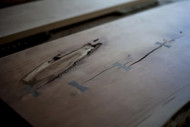
Low humidity is the most damaging condition for solid wood furniture in Alberta. As moisture content drops, wood fibers contract. If the change happens too quickly or drops too low, stress builds within the material, leading to surface cracks or joint separation.
Large, flat surfaces such as dining tables, cabinet doors, and wide panels are especially vulnerable during winter. Without moisture control, even well built furniture can show signs of shrinkage over time.
Expansion and Warping During Seasonal Shifts
As humidity rises in warmer months, wood begins to reabsorb moisture. This expansion can cause boards to swell unevenly, leading to warping, cupping, or twisting. Furniture located near windows, exterior walls, or HVAC vents is often affected first.
Repeated expansion and contraction over multiple seasons increases long term stress on joints and finishes, which can shorten the usable lifespan of furniture.
Recommended Humidity Ranges for Solid Wood
To minimize seasonal damage, solid wood furniture performs best when indoor relative humidity is kept within a stable range.
The generally recommended range for solid wood interiors is:
- 35 to 50 percent relative humidity year round
Maintaining consistency matters more than hitting an exact number. Rapid changes are more damaging than slightly imperfect levels.
Preventing Humidity Related Damage
Several practical steps help protect solid wood furniture in Alberta’s climate.
Using whole home or room specific humidifiers during winter helps restore moisture lost through heating systems. Monitoring indoor humidity with basic sensors allows early correction before damage occurs.
Proper placement also matters. Furniture should be kept away from direct heat sources, exterior doors, fireplaces, and vents that create localized drying or moisture spikes.
Choosing well milled, properly dried materials from a reliable solid wood supplier reduces risk from the start. Furniture made with stable moisture content responds more predictably to seasonal changes.
Maintenance Tips for Long Term Stability
Routine care supports moisture balance and surface protection.
- Maintain consistent indoor humidity levels
- Avoid placing furniture near heat or air flow sources
- Use protective finishes that slow moisture exchange
- Clean and condition surfaces as recommended
- Allow furniture to acclimate before use after delivery
When sourcing furniture or materials, buyers exploring solid wood options from Alberta friendly suppliers like Solid Wood Superstore often benefit from guidance on species selection and moisture behavior.
Choosing the Right Wood for Alberta Homes
Some wood species tolerate humidity changes better than others. Denser hardwoods with stable grain patterns generally perform better in fluctuating environments. Construction methods that allow for controlled movement also reduce visible damage over time.
For homeowners planning furniture purchases or repairs, discussing humidity considerations early helps avoid costly issues later. Asking specific questions through a wood furniture consultation request can clarify how different materials behave in Alberta conditions.
Managing Seasonal Wood Movement
Seasonal movement is unavoidable with solid wood, but it can be managed. Understanding how humidity affects furniture allows homeowners to take preventative steps rather than reacting after damage appears.
With proper moisture control, placement, and material selection, solid wood furniture can perform reliably in Alberta homes for decades.